Automated Vial INspection
The Future of Automated Visual Inspection in Pharma.
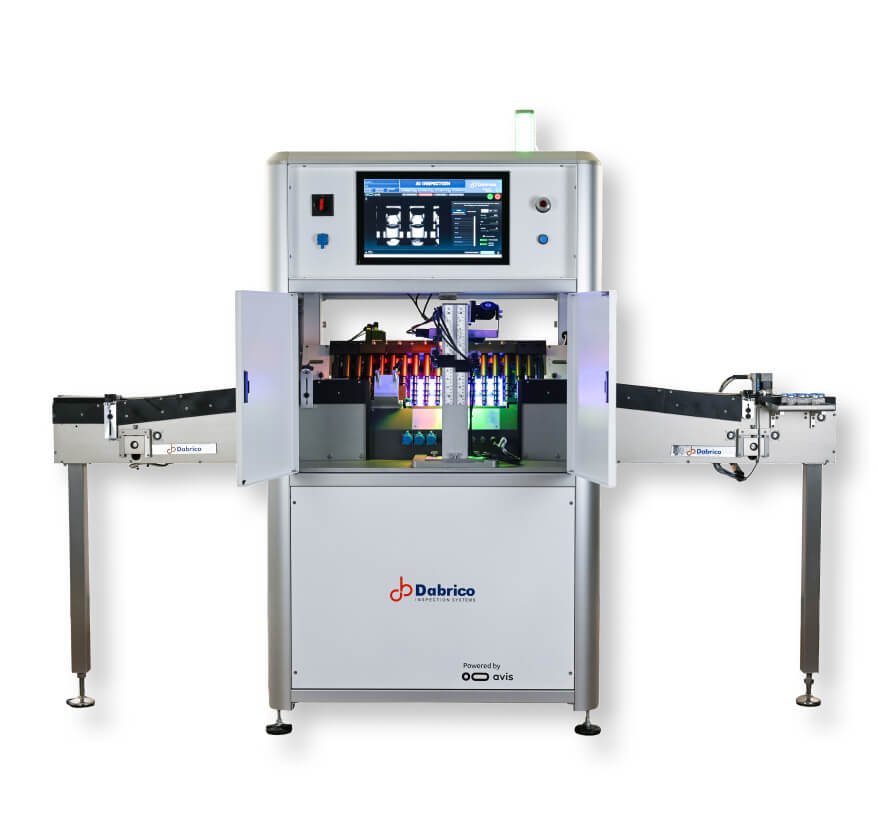
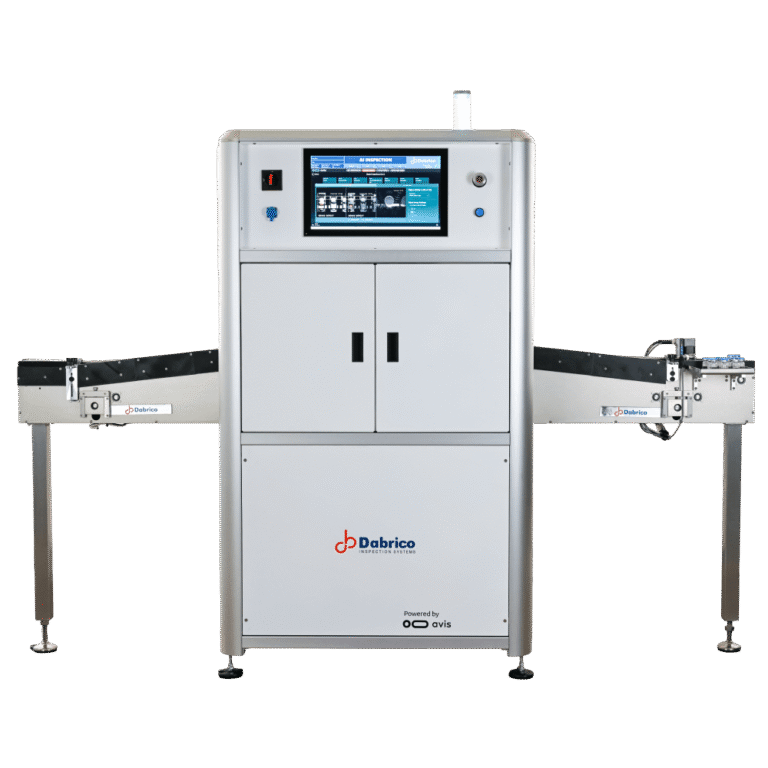
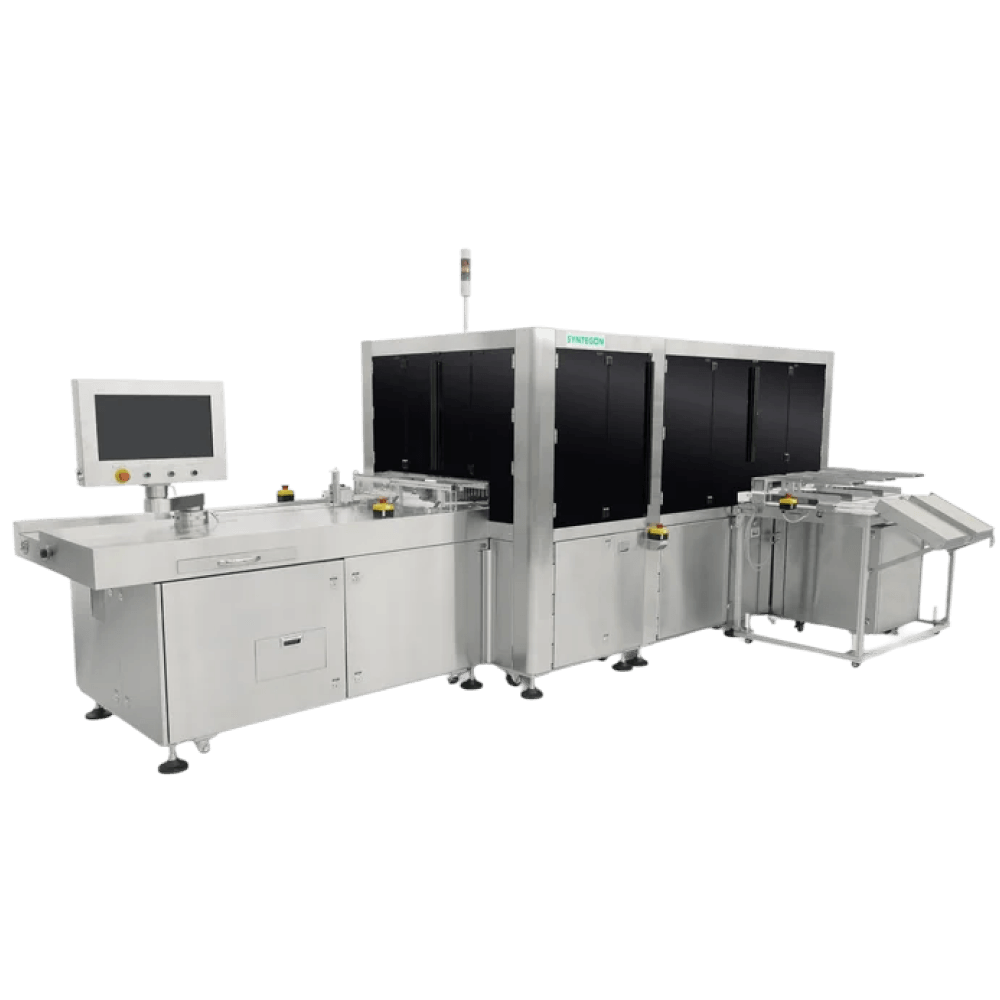
Introducing the DAI-50 by Dabrico and Boon Logic: the first AVI powered entirely by artificial intelligence.
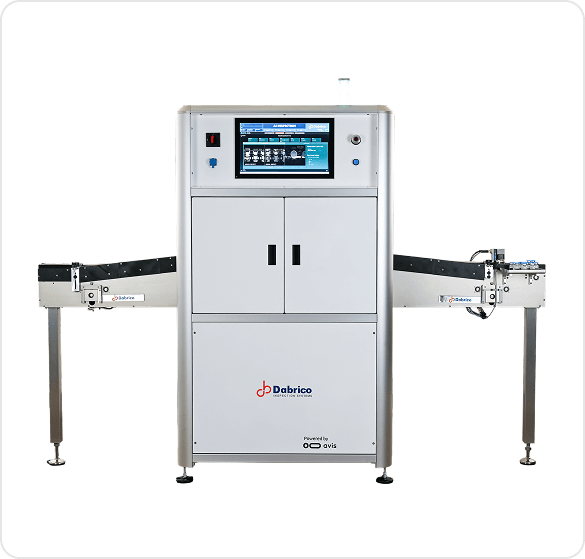
Enhance product quality and 3X inspection speed with the DAI-50
The DAI-50 brings together Dabrico’s 45 years of pharmaceutical visual inspection expertise and Boon Logic’s AVIS AI platform to set a new standard for automated vial inspection: human-like adaptability with validated, automated performance.
Dimensions: 97 in x 74 in
Speed: Up to 90 units/mon
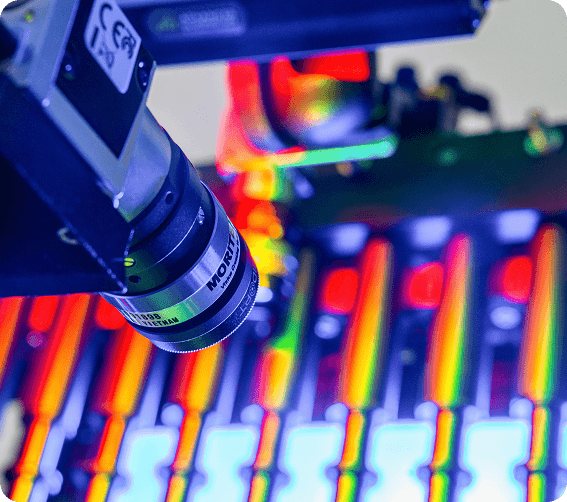
Cameras: 3-4
Container size: 1 ml to 1,000 ml
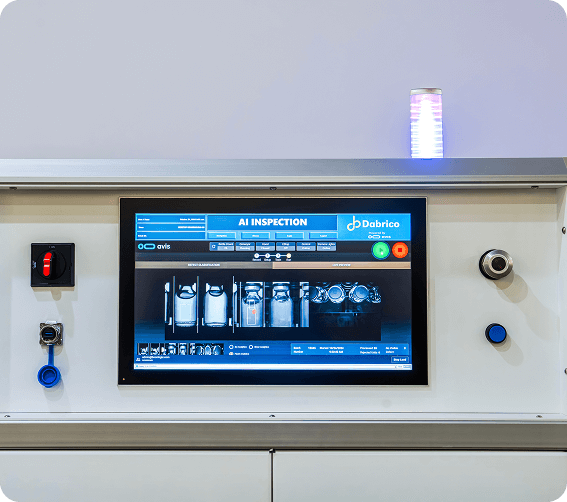
Inspection technology: AVIS (unsupervised ML)
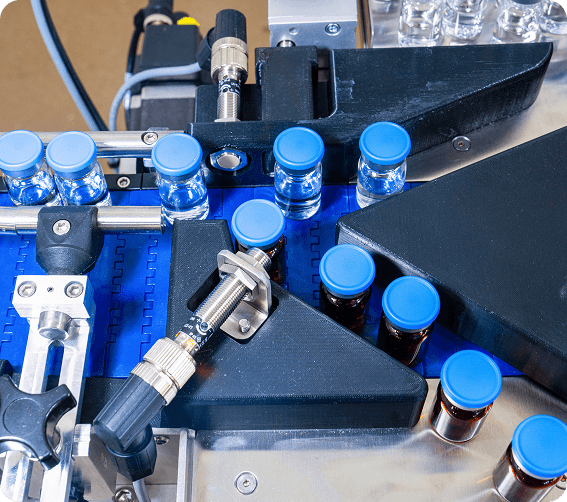
Flexibility: vials, syringes, and ampoules in one platform
Compliance: GMP-ready and straightforward qualificaiton
A Better Approach to Automatic Vial Inspection
90 units/minute
Fast and genetle material hadling
Unsupervised ML-based defect detection
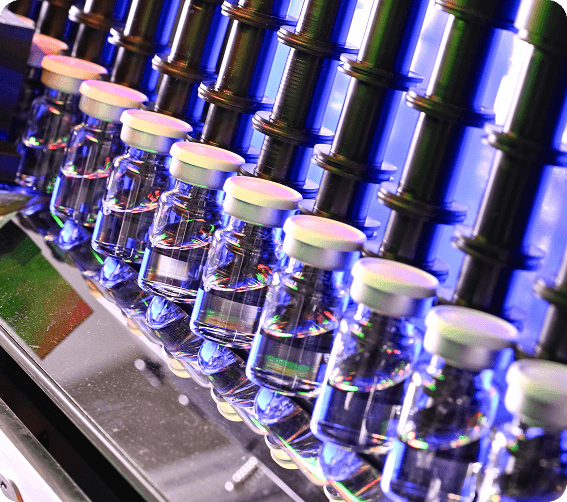
360-degree coverage
Consistent Visual Inspection for Difficult-to-Inspect Vials
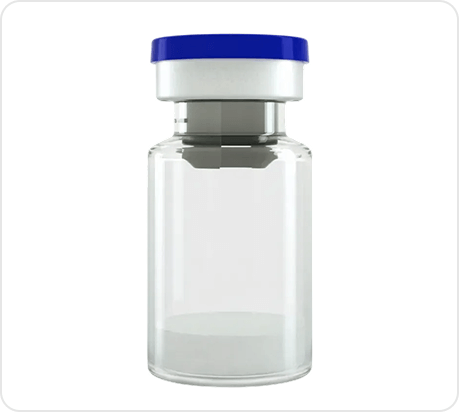
Freeze-dried products
Lyophilized products, such as vaccines and certain antibiotics, pose unique inspection challenges because natural variation in appearance can closely resemble true defects. By learning normal product variation directly from compliant units, the DAI-50 avoids rigid defect rules and instead flags only meaningful anomalies—delivering reliable detection without mistaking acceptable variability for defects.
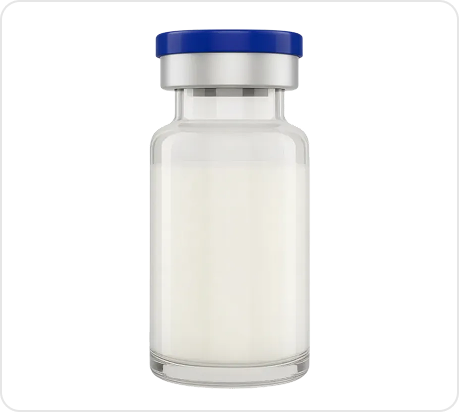
Milky products
Camera-based inspection is well suited for opaque or milky formulations like propofol, where inherent variability can obscure true defects. By modeling normal appearance from compliant product and combining controlled imaging, rotation, and optimized lighting, the DAI-50 improves detection accuracy while minimizing false rejects driven by acceptable product variation.
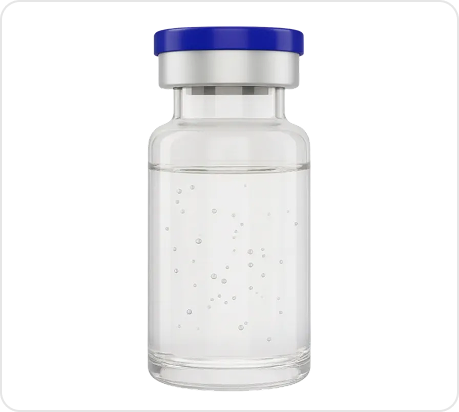
Bubble-prone products
Protein-based formulations often produce bubbles that closely resemble defects during inspection. By learning normal bubble behavior from compliant product, the DAI-50 distinguishes harmless bubbles from true contaminants, improving inspection accuracy while reducing unnecessary rejects.
Suspensions
Suspended products like insulins and certain vaccines are more difficult to inspect than clear solutions due to inherent visual variability. By combining controlled rotation with optimized imaging and learning normal product behavior from compliant units, the DAI-50 makes true contaminants easier to detect without increasing false rejects.
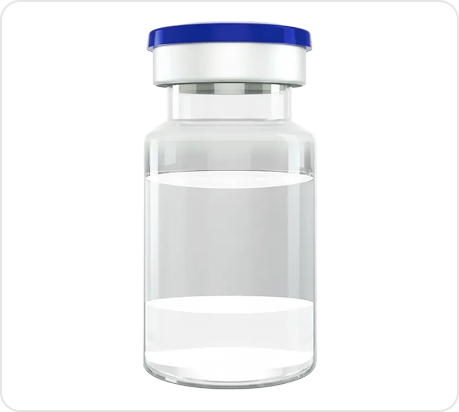
Water-like products
Clear, water-like solutions such as vaccines or GLP-1 products require extremely sensitive inspection to detect small particulates. By learning normal optical behavior from a compliant product and combining high-resolution imaging with configurable lighting from multiple angles, the DAI-50 delivers reliable detection with minimal false rejects.
Train a New Visual Inspection Recipe in Minutes
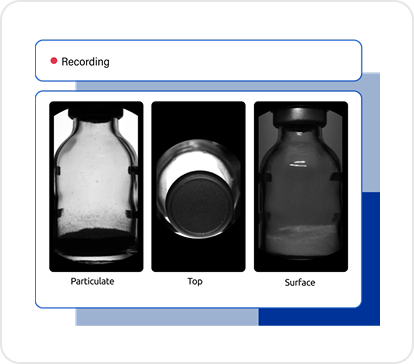
The first step in creating a new inspection recipe in AVIS is to record 500 pre-inspected compliant units, covering normal product variations like powder disposition, bubbles, fill level, glass molding, and more. AVIS uses three cameras, capturing hundreds of images from the top, inside, and outside of each unit at 60 frames per second per camera.
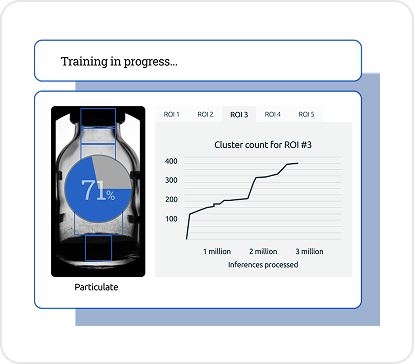
After recording, configure regions of interest (ROIs) for all three cameras. Since the units rotate 360 degrees, ROIs can be positioned in areas prone to defects, including easy-to-inspect features like the side wall and shoulder, as well as challenging areas like the vial base, oblique views of lyo cakes and powder, and tamper-evidence seals.
AVIS uses Boon Logic’s unsupervised machine learning algorithm, Boon Nano, to learn the normal variation for each Region of Interest (ROI). A learning curve tracks the model’s progress for each ROI. Initially, the curve is steep as AVIS learns significant variations, but it levels off toward the end, indicating that most normal variations have been integrated into the recipe. Ten unique models are trained, one for each of the 10 ROIs.
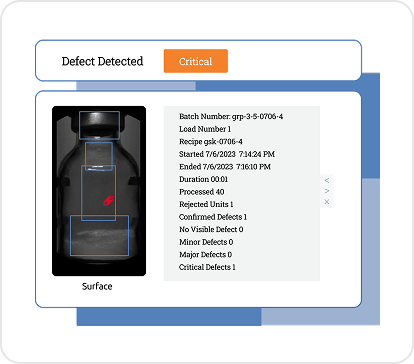
In run mode, AVIS makes 100,000 machine learning inferences per vial. Anomalies outside the learned normal variation trigger a spike in the anomaly index, indicating a potential defect. AVIS determines whether a unit is defective within milliseconds, triggering actions like ejecting the unit, stopping the conveyor, or flashing a light. The defect’s video frame, with the exact location highlighted, is displayed and archived for trend analysis.
Reimagine Automated Vial Defect Detection
The future of pharmaceutical visual inspection isn’t about choosing between the flexibility of human inspectors and the consistency of a machine. It’s about combining both. The DAI-50 delivers an AI-powered vision system that brings consistency, adaptability, and precision to modern quality control.
Traditional automated visual inspection systems rely on rigid rules and predefined defect categories. The DAI-50 takes a different approach to defect detection. It learns what “good” looks like and flags anything outside that pattern, enabling more reliable vision quality across real-world production variability.
This transforms quality inspection systems by delivering:
- More accurate detection across complex products
- Consistent quality control without human variability
- Scalable performance for high-mix, low-volume environments
The result is a higher standard for machine vision inspection. One that elevates the inspection process from start to finish.
Schedule a Demo and
See the DAI-50 in Action
DAI-50 vs Other Vial Inspection Machines
See how the DAI-50 compares with traditional vial inspection systems and deep learning alternatives. Compare technology, setup time, training requirements, inspection accuracy, false eject rates, and total cost of ownership.

Frequently Asked Questions
Choosing the right automated visual inspection (AVI) machine can be hard. To help, we put together a list of the most common questions our customers ask.
What products, contaer formats, and defect types can the DAI-50 inspect?
We designed the DAI-50 for a wide range of pharmaceutical products including:
- Vials
- Prefilled syringes
- Ampoules
- Clear and cloudy liquids
- Suspensions and emulsions
- Lyophilized products and powders
- Molded glass vials and other pharmaceutical glass containers
It is particularly well suited for products with significant normal variation. Inspection can be configured for particulates, cosmetic defects, product abnormalities, and visible closure issues involving components such as stoppers or crimp caps.
How does the DAI-50 differ from traditional automated visual inspection systems?
Traditional automated inspection often relies on predefined rules, thresholds, or known defect examples. AVIS takes a different approach. Using unsupervised machine learning, it learns the normal variation present in compliant products and identifies units that deviate from that baseline.
This is especially valuable for products such as molded glass, powders, lyophilized products, and suspensions where acceptable units do not always look identical. By better accounting for normal variation, the DAI-50 can maintain strong defect detection without unnecessarily driving up the false reject rate. For manufacturers moving beyond manual or semi-automated inspection, this level of automation can also dramatically increase efficiency and inspection consistency.
Do we need a defect library or labeled defect samples to create a new inspection recipe?
No. AVIS does not require a defect library to train a new inspection recipe.
Instead, we typically begin with approximately 500 pre-inspected compliant units. AVIS uses those units to learn what normal product and container variation looks like within defined regions of interest.
Defect samples are still important, but for a different reason. After the recipe has been trained, representative defects can be used to challenge the model and demonstrate that it reliably detects the defects that matter to your process. In other words, defects are important for testing and qualification, but they are not required to teach AVIS what every possible defect looks like.
What detection performance and false reject rate can we expect with the DAI-50?
Performance depends on the product, container, defect types, imaging configuration, and acceptance criteria, so we do not promise one accuracy or false reject rate for every application.
We prefer to evaluate performance using the manufacturer’s actual product and representative defect set.
In one study involving a difficult powder-filled molded glass vial, the DAI-50 achieved a 98% probability of detection across 10 defect types while maintaining a 2.7% false reject rate.
The goal is not simply to reject as aggressively as possible. A strong inspection process needs to reliably detect true defects while also protecting acceptable product from unnecessary rejection.
What does qualification and validation of the DAI-50 look like for GMP production?
The DAI-50 is designed to support established IQ, OQ, and PQ qualification workflows.
Installation Qualification verifies that the system has been installed correctly. Operational Qualification confirms that the machine, software, cameras, lighting, material handling, recipe functions, and rejection systems operate as intended. Inspection performance can then be challenged using known defect and compliant units, including comparison against qualified human inspectors. Performance Qualification evaluates the inspection process under actual production conditions.
Once an AVIS recipe has been trained, tested, and approved, it can be frozen rather than continuously learning during production. This provides a controlled inspection state that can be managed within the manufacturer’s validation and change-control procedures.
How long does it take to create a new recipe and change over between products?
Creating a new AVIS recipe typically follows four steps: record, configure, train, and run. Under appropriate conditions, the complete recipe-development process can take approximately 45 minutes, with the AVIS model-training portion typically taking less than 15 minutes.
That is recipe creation, not complete GMP qualification. Testing and qualification still need to be completed before the recipe is used in validated production.
Physical changeover time depends on the container and machine configuration. Different vial sizes may require guide or roller adjustments, while switching between container formats can require additional change parts. Once a product has a qualified recipe, that recipe can be selected again when the SKU returns to production.